Category Archives: Reading matters- Lectuur

Ten books of summer: update book 3

Yeah, summer’s long gone but I haven’t finished my reviews yet! More coming, I guess, as I did manage to read a few more!

Some books start off as one thing and then become something else and it’s ok — as I wrote about in my previous update, that happened in Dan Holloway’s Our Dreams Make Different Shapes, which morphed from coaching you in memory techniques to boost creativity into a manifesto for diversity in society and the workplace, but it all made sense.

For other books, that transformation from one thing to another doesn’t quite work. Justin Jacobs’ Indiana Jones in History should really just have dropped that last section about the space race. That’s pretty much my only quibble with the book, and once you know that’s coming, you can maybe decide to skip that section and move ahead to the final chapter which is just👌🏻

I taught a course on material culture of China, and we touched on the ethics of archaeology. I tried to ensure that one thing students would get comfortable with by the end of the course was to ask the question “How did this thing end up in this museum?” It’s common sense enough and yet few people seem to ask! This book and the excellent accompanying little YouTube videos go a long way to answering those questions. Fair warning: you may want to watch the Spielberg Indie movies before diving into all of this, because the adventurer’s story won’t be the same again.

Jacobs’ writing is geared towards the curious non-specialist, and not weighted down with notes but still based on thorough research, I can confirm for the China chapters. Definitely worth reading!

screenshot of a Classical Studies Memes for Hellenistic Teens post on Twitter. 
lmaonade: My favorite video game quest trope is [all caps text] "help us, they are stealing our ancient artifact, thank you for helping us, as a reward you may have our ancient artifact"
Reply by 6qubed: "The ancient artifact was less important than having agency in its distribution"
Reply by Suinicide: "Nothing is more important than keeping it out of the hands of the British museum"
British Museum, Brutish Museums… ¯\_(ツ)_/¯

Connect with me on Bookwyrm, where I am adding details about my book reading adventures.

Ten books of summer: update books 1 and 2

I’m currently through the first four books of my Ten Books of Summer challenge (my personal list is in the previous post), but it’s slow moving, because I seem to have picked some titles for my list that just can’t be hurried. That’s because the content requires attention, not because they’re boring! And because these are worth my attention, I choose to savour the ideas they develop; I’m not in a hurry to get through them. Let’s kick off my mini-reviews!

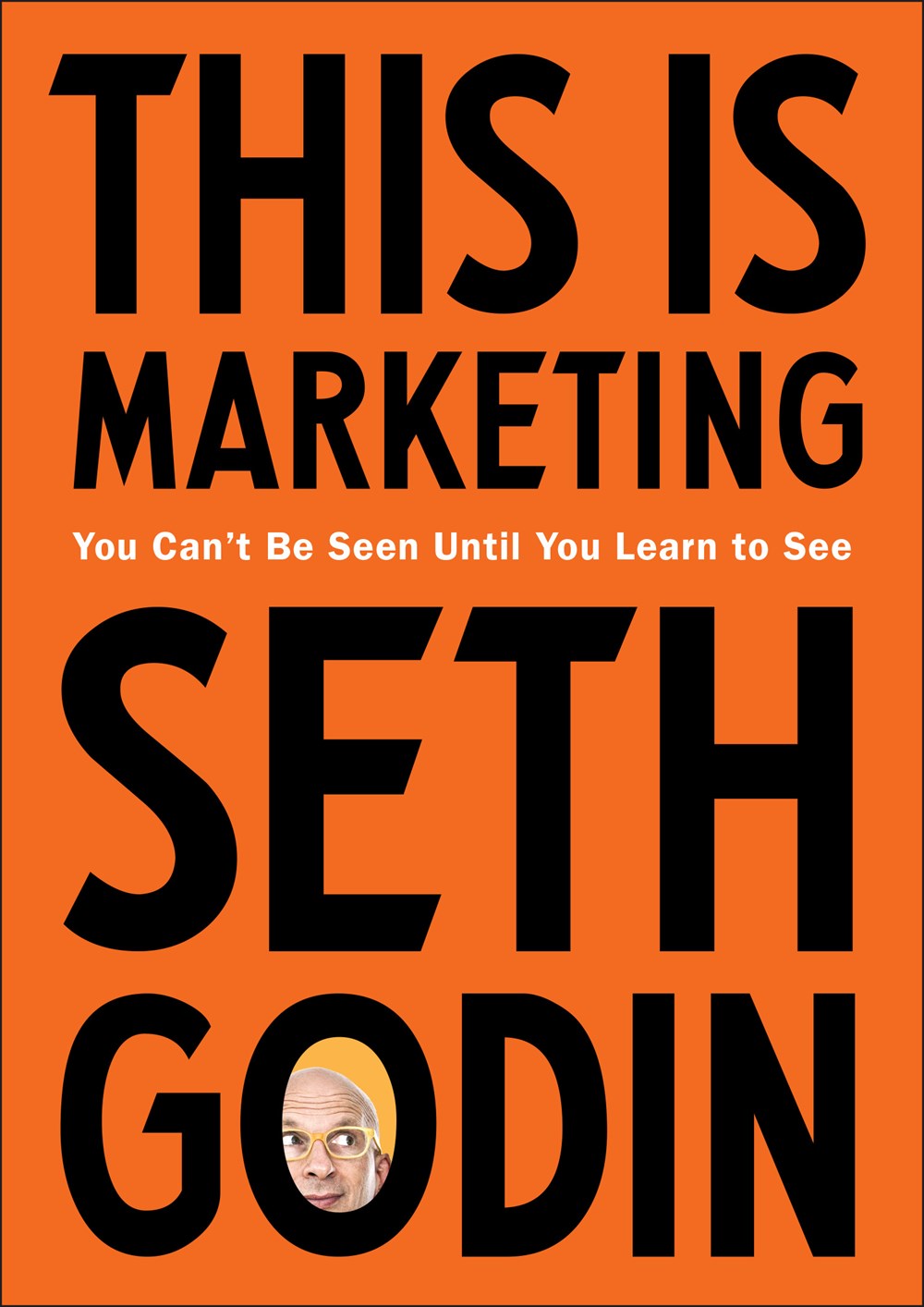
Cover of the book “This Is Marketing” by Seth Godin

The first of these “slow books” was Seth Godin’s This Is Marketing: You can’t be seen until you learn to see. If you know me, the last thing that comes to mind is marketing, and I am not looking into a Sales and Marketing role. (“Influencer” is about as low as a theme can go on my Clifton Strengths list, FYI). But Seth is different, of course, and he clarifies that everyone is in the business of marketing something to someone, trying to convince someone somewhere of something: to hire you (oh hi, that would be me!), to check out your art, to attend a concert (whether with you, or to hear you perform), to spend some time with you, to listen to your cool idea to improve the team or save the world or just to get a raise, or even how to make better coffee. This is marketing that makes me able to live with myself: it’s not about selling your soul to the devil and then living on the proceeds, but about how to make your work align with your values. It’s about how to create something that you can be proud of, so you can share and –where appropriate– sell in a way that makes you proud to make the world a better and more beautiful place. “Who’s it for?” is the central question the book keeps returning to, because what you make can’t be for everybody if it’s actually a worthwhile thing. And that’s what I need to learn. That some of the things I create are not for you, but for somebody else. And that it’s ok when I need to say that. There’s a whole lot more in this short book, and I urge you to give it a look and spend some time with these ideas, and the many others from Seth Godin, because he has a lot of interesting and thought-provoking ideas. Not all of his ideas may be for you, but some of them will be.

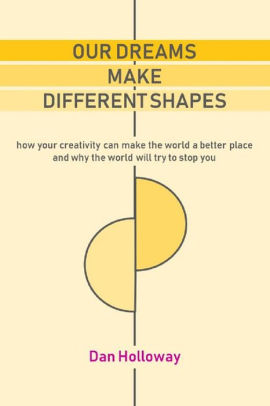
Cover for the book “Our dreams make different shapes”

A second book I worked my way through quietly and slowly was Dan Holloway’s Our Dreams Make Different Shapes. The subtitle sounds ominous: How your creativity can make the world a better place (ok, not that part) and why the world will try to stop you. Why would the world try to stop you from making it a better place? Hmmmm… You should really read the book! But let me say this: this is a master course in writing a book with excellent “shadow objectives”: I know Dan a bit from our shared time in Oxford, and have admired him for his endurance feats in the mental and physical world. As a creativity champion and –among many other things!– an eloquent advocate for disability rights,  I’m ready to listen to what he has to say, because thanks to him I already learned a lot on how to make the world a better place for my fellow human beings (and I have a lot to learn yet). We start off with memory palaces, and how to deploy them for increasing our creativity, for creativity is putting things together in ways people haven’t done before, and you should have a healthy stack of nuggets of info on hand for that. It’s also about pushing boundaries in unexpected directions. It’s very practical “here are exercises you can do to make you a more creative person. Try it!”

But Dan has also carefully observed that we’re pushing against boundaries that even creative people cannot move leave behind entirely if they want their creativity to have an effect on the world. Those people who were “ahead of their time”? They went too far out of the box, and the world just was unable to see their vision, for instance. Problem is, we’re now in a world where we need creativity more than ever to solve those “wicked problems” and our society is not encouraging the maximum number of creative people to take part in solving them. Or society is not listening to them.

Once you reach that section, the book quietly slips for all the right reasons into a well-reasoned and clear manifesto for diversity. A truly creative society needs the diverse perspectives “non-normative” people bring (but what is normal but a small sliver of society, of those people that just happen to have power and money), and this slim volume deftly combines those tricks you crave to boost your creativity with a call to action that, if we choose to listen, will leave the world a better place for more creatures –including humans.

I did not intend for my first two books to be such nice complements to each other, but it turns out these are a nice set if you’re in need of inspiration and encouragement to act.

The next two mini reviews will follow shortly. Until then, connect with me on Bookwyrm or leave a comment and share what you’re reading this summer!

10 Books of Summer

A friendly Mastonaut tagged me for a reading challenge “20 books of summer”, from the 746books blog.

It’s a friendly challenge, with no strict rules, other than just reading books during the summer: “Set a list in advance. Make it twenty. Or ten if that feels better. Swap out books if that feels good.” I mean… the more I look at that list, the more I see a host for this challenge who is indeed “bend[ing] the rules to help anyone reach their goal.”

That suits me, because my tangible books will be on the move and physically unavailable to me from late June until they show up sometime in August I guess. But I do have plenty of books on my iPad and some stashed away in Libby, the library app, on my tsundoku pile.

Also, I LOVE that this is a blog where the comments are how you participate in the challenge. I feel like I’m back in 2009. Blogosphere was good. We still have blogs and RSS – that’s a rant for another day. Here is my list for the summer of 2023 reading:

  1. Indiana Jones in History: From Pompei to the Moon – Justin Jacobs
  2. Our Dreams Make Different Shapes: How Your Creativity Could Make the World a Better Place and Why the World Will Try to Stop You – Dan Holloway
  3. The Confession of Brother Haluin (Cadfael series) – Ellis Peters
  4. Dead Famous – Greg Jenner
  5. The Memory of Love– Aminatta Forna
  6. Eleanor Oliphant Is Completely Fine – Gail Honeyman
  7. The Song of Achilles – Madeline Miller
  8. The Sinister Way: The Divine and the Demonic in Chinese Religious Culture – Richard von Glahn
  9. This Is Marketing – Seth Godin
  10. Ilias: Wrok in Troje – vertaling Patrick Lateur

That’s a couple of books I already started, a few I heard the name of but don’t really know what to expect at all, a few that have been on my “really should read this” list, one that slipped through the Africana Book Club so I’m reading it now myself. Some fiction, some non-fiction, some translation, some China, some history, some world literature. A nice variety. Now… I need to pin this list up so I don’t lose sight of my goal!

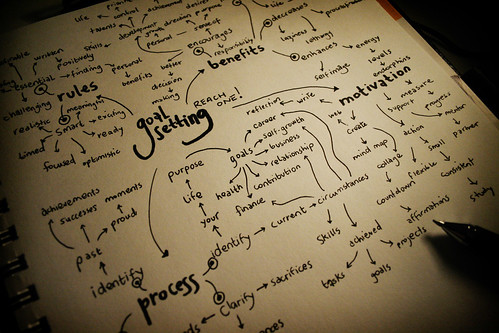
Goal Setting
“Goal Setting” by angietorres is licensed under CC BY-NC-ND 2.0.

Between the Covers, 2016 | Van kaft tot kaft, 2016

chinese primary sources from zhonghua shuju

The Green Wall of Standard Histories, and other primary sources

It’s that time of year again. Or rather, I am slightly behind the times: it has been that time of the past year again, when people make lists of everything related to 2016.

Continuing my habit from 2015, I tracked all the books I read cover-to-cover and finished during 2016 (some were started much earlier). I am happy to report that the total number has gone up! There are twelve books that can be classified as fiction, and some real classics in my list. Continue reading →

Between the covers in 2015| Van kaft tot kaft in 2015

It’s a funny thing you hear a lot of academics say these days, especially in Humanities: “But who still reads books cover to cover?” We tend to read chapters, or just the Introduction, or hunt down the small piece of information we need, but indeed: we rarely sit down and just read the entire thing. Continue reading →

Awel… |So…

“Awel, nu je niet meer op facebook rondhangt, wat steek je de hele tijd uit?” moet zowat de vraag zijn die op ieders lippen brandt. Ik heb geen TV, dus daar kan de tijd ook niet inkruipen.  De afgelopen weken heb ik het vooral met de presentatie van mijn werk voor de Society of Fellows druk gehad, mijn “baas” dus. Dat is nu achter de rug, en we kunnen weer even ademhalen. Maar voordien waren er ook andere aangename bezigheden:

“So now you’re not hanging out on Facebook anymore, what *do* you do with your time?” Surely you have been dying to ask me that? I haven’t got TV, so I am not wasting time in front of the goggle box. The past few weeks I mainly worked on the seminar presentation of my work, at the Society of Fellows Friday seminar- my “boss”, so to speak. That is now behind me and I can breathe again. But before all of that, there were a few other ways to idle away my time.

Leeshoekje – Reading Corner:
Reading corner

Even dichterbij kijken- rara…- Close-up- guess what?:
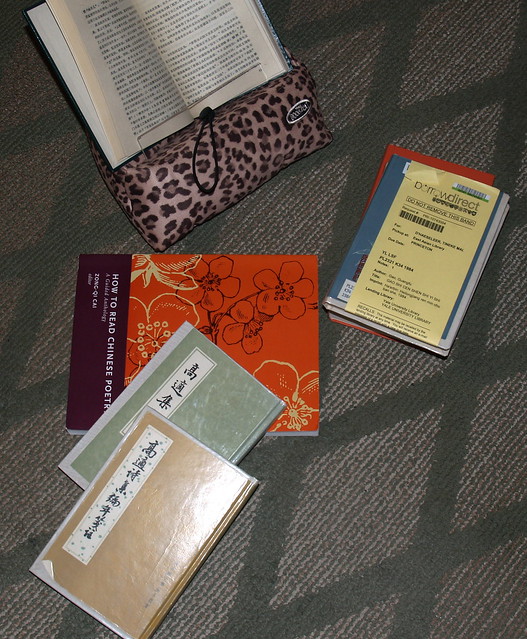
Close up

Vertaalstation en correspondentietafel – Translation Station and correspondence desk:
Translation Station

Leesplank- Reading table:

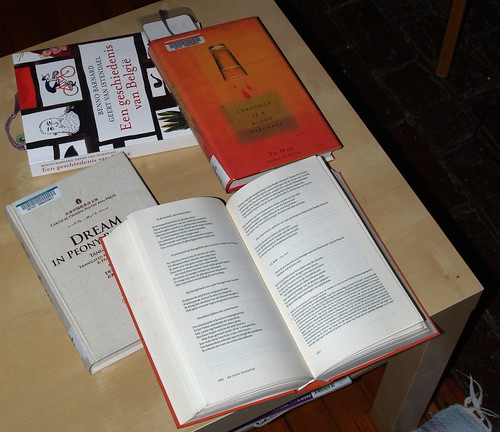
Reading table 1

(NB: mini-besprekingen in de taal van het boek, mogelijk met uitzondering van Chinees ;-). Note: mini-book reviews in the language of the book! Perhaps with the exception of Chinese 😉 )

Yu Hua, Chronicle of a Blood Merchant. (Translated from Chinese) I like this one. Reads like a train, I tore through it in no time, because you just want to find out what happens next and how the main character will react when live throws another of its curve balls at the poor man.

Tang Xianzhu, Dream in Peony Pavilion. (Translated from Chinese) It is on the reading list for the course I teach this semester (why yes, because I put it there!), and this particular translation was terrible, enough to turn any student from ever wanting to read any more Ming dynasty plays. Don’t worry, there is another translation for them, much better, from Cyril Birch.

Wilt Idema, Spiegel van de klassieke Chinese poëzie. (Vertaald uit het Chinese, met inleidingen en annotatie). Grote collectie van Chinese gedichten, vertaald naar het Nederlands. En dan nog goed gedaan ook! Een goed werk voor wie wil kennismaken met een heel andere traditie van spelen met woordjes, klanken en taal. Uiteraard gaat er heel veel verloren in een vertaling: sommige verzen hebben toon-patronen, en het rijm valt weg, net als het visuele aspect van de gedichten. Toch opent deze collectie een wereld van belevingen en emoties uit vele eeuwen Chinese dichtkunst, die niet mag verborgen blijven. Er zijn andere collecties en vertalers, maar wie eens wil proeven van Chinese dichtkunst, moet dit lijvige werk maar eens in de lokale bib opzoeken. Leg het op je nachtkastje, en als je ‘s nachts niet kan slapen kan je misschien wel gezelschap zoeken bij de dichters van 1300 jaar geleden. Ook zij hadden muizenissen…

Benno Barnard en Geert van Istendael, Een geschiedenis van België (voor nieuwsgierige kinderen en hun ouders). Een kerstkadootje, en heel leuk! Het is moeilijk om goede geschiedenis te schrijven. Het is nog veel moeilijker om dat op een bevattelijke manier te doen voor kinderen. Een paar opmerkingen rond prehistorie doen de tenen krullen van elke rechtgeaarde historica die zich op een blauwe maandag wel eens bezighoudt met nomaden, vroege culturen en beschavingen (“oh nee, gaan ze dat nu echt aan een volgende generatie doorgeven? Weer iets dat ik er moet uithameren in mijn colleges…”) maar dan herpakken de schrijvers zich geweldig goed. Verhelderende vergelijkingen met hedendaagse situaties; problemen rond objectiviteit en meerdere manieren van kijken naar dezelfde gebeurtenis; mythevorming en (onterechte) verheerlijking van helden; dat zijn slechts een paar van de thema’s die af en toe weerkeren om aan de historici in spe uit te leggen dat geschiedenis iets heel anders is dan gewoon even alle feiten op een rijtje zetten.

Ik heb een hele stapel boeken waar ik nog door moet, maar laat gerust een commentaartje met je tips voor mijn “toekomstlectuur”-plankje. Misschien zie je jouw tip in een toekomstige editie van de Leesplank!

I have plenty of reading to get on with, but feel free to leave me tips for my virtual book shelf in the comments! With a bit of luck, you’ll see your suggestion in a future edition of the Reading Table!